
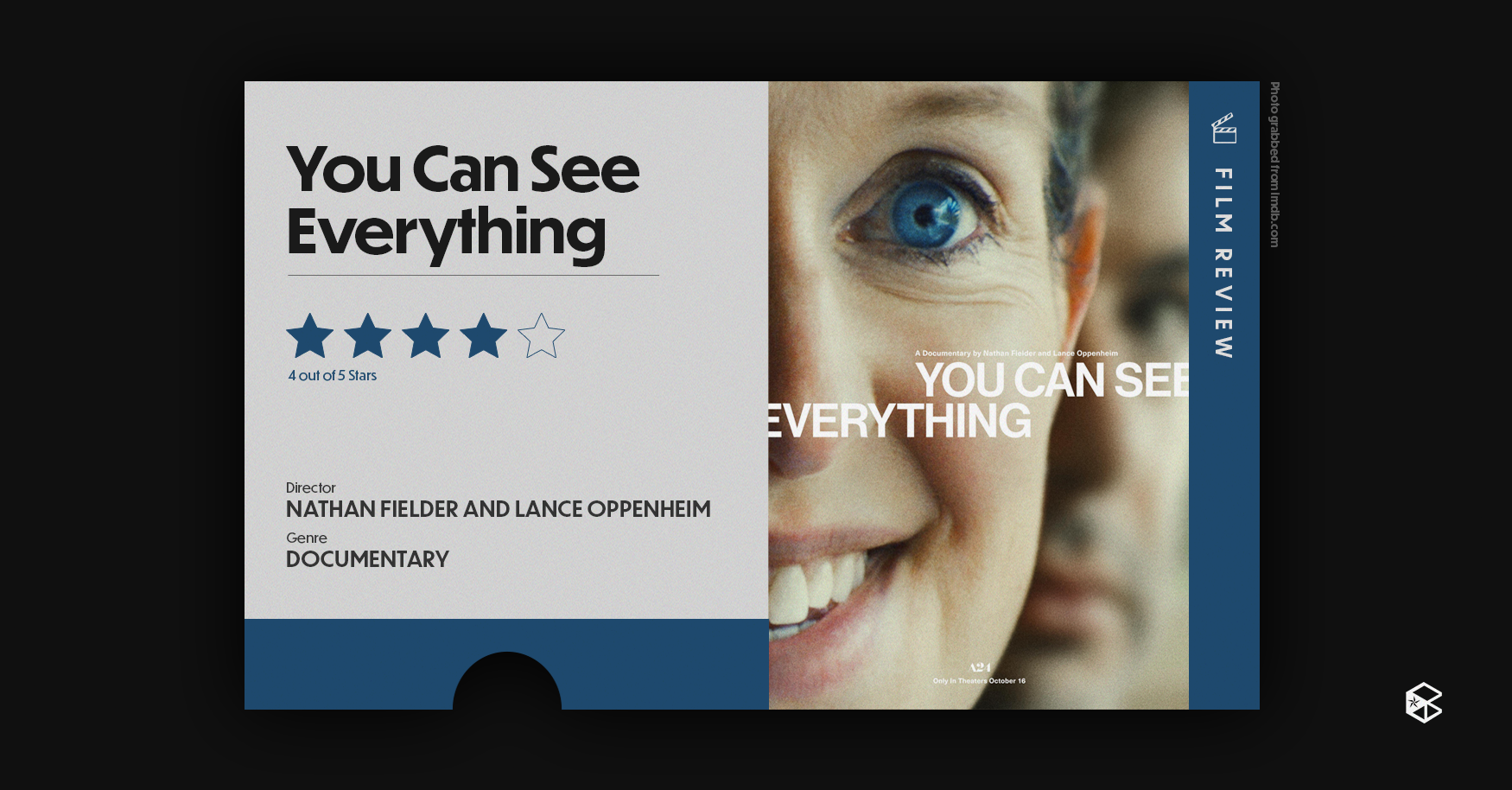




There is a difference between seeing everything and understanding what is right in front of you. You Can See Everything, released on Oct. 16, invites audiences into the life of Elizabeth Holmes through a documentary-like experience that blurs the boundaries between fiction and reality.
Directed by Nathan Fielder, known for the satirical docu-reality comedy television series Nathan for You (2013), and Lance Oppenheim, director of the documentary The Python Hunt (2025), the film initially appears to offer a glimpse into the life of a well-known public figure. However, it eventually turns into an exercise of curiosity, leaving viewers with more questions than answers.
When observation becomes curiosity
Beginning as an intimate depiction of Holmes and her partner in a California beach house, the film develops into an examination of the subjective nature of truth, human bias, and media manipulation. The movie revolves around the controversies surrounding Holmes, the former CEO of Theranos, a health technology company she founded in 2003. The company later collapsed after being exposed as a medical fraud. There is a certain distinction between watching someone's life unfold and actually understanding the person living it. You Can See Everything explores this very idea through an unusual experience.
Rather than presenting a straightforward account of a public figure, the film takes a different approach through its documentary-like presentation, deliberate pacing, and emphasis on the curiosity of those attempting to understand Holmes. It is an intriguing watch for audiences interested in psychological complexity and the limitations of observation, particularly when the person being examined is a challenging comprehension exercise.
The curiosity behind Elizabeth Holmes
One of the film’s more interesting aspects is how it emphasizes the interviewers' confusion and curiosity about Holmes, especially in scenes that examine her family and personal circumstances. Their questions reflect what viewers may find themselves asking while attempting to understand her beyond her established public image.
There is an underlying curiosity about what truly goes on in Holmes' mind. Considering her history and the controversies surrounding Theranos, audiences may approach the film with preconceived ideas about who she is. But the film takes this opportunity to observe her in a more personal setting, away from the public narrative surrounding her, creating a contrast between her image and what many are still attempting to understand.
As the interviewers’ questions lead to more inquiries, viewers share the same desire to understand the person in front of them. It becomes less about arriving at a conclusion and more about the difficulty of understanding someone who presents themselves unambiguously.
Furthermore, the film allows this curiosity to exist without immediately resolving it. This is an effective storytelling decision that gives audiences the opportunity to form their own observations.
The blurring of fiction and reality
Perhaps the film's most distinctive quality lies in how it plays with the boundaries of documentary filmmaking, creating an experience that feels authentic yet keeps its audiences aware that what they are watching has been deliberately arranged.
This relationship between fiction and reality becomes particularly interesting when considering the subject herself. How much can a camera actually reveal about someone? Does having access to a person's private life automatically mean understanding their intentions?
This is where the film's experimental take becomes particularly effective. Its atmosphere encourages audiences to believe they are seeing through an unfiltered lens, even as its intentional construction reminds them that every filmed interaction exists within a particular perspective.
An unconventional approach worth experiencing
You Can See Everything offers an intriguing approach to documentary filmmaking by allowing its audience to become part of the process of questioning and understanding its subject. Its pacing may not immediately appeal to viewers who prefer straightforward answers, but for those willing to immerse themselves in a more observational experience, its opening establishes the idea that even ordinary interactions are worth examining.
The film's greatest appeal lies in its ability to leave audiences wondering: Even when everything appears to be visible, some things remain beyond our understanding.
You Can See Everything comes to Philippine theaters on Nov, 18, 2026!
