
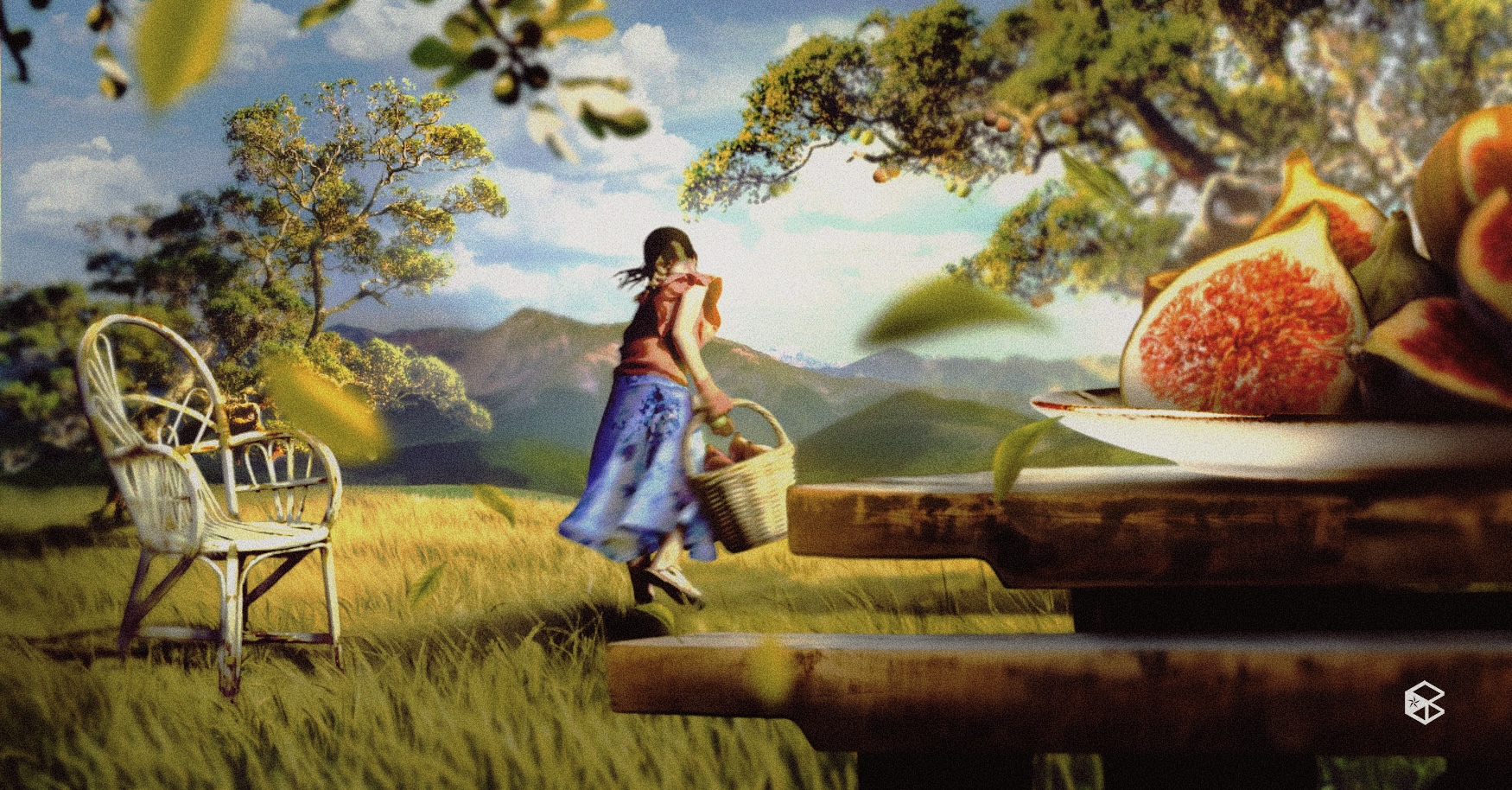




I have three tables, but nowhere to eat.
The one in my bedroom is cluttered with paint tubes, pencils, and pastels. I want to be an artist. But I also want to be an architect, so the one in my living room is buried under acetate, sintra boards, and twisted tubes of E7000. And at the dining table, of course, there’s food—or, well, the ingredients for it, at least. I also want to be a baker.
I want to do everything. So I sit on my floor, eat my dinner, and do nothing at all.
There’s a line from John Steinbeck’s 1952 novel, East of Eden, that stuck with me: “In the future, nobody will know everything. Each person will know only a small part, and that will have to be enough.”
This future is no longer hypothetical. It is our present, and I find myself frustrated by it. As insufferable as this may sound, I want to write, make art, learn languages, explore the sciences, and immerse myself in different cultures. Which is to say, I want to do everything short of splitting myself into six people, each with different degrees and crippling amounts of student debt.
As human knowledge has expanded, so has our need to specialize—to pick one tiny corner of the universe and spend entire lifetimes figuring it out. Every field demands its own mountain of textbooks, qualifications, and sleepless nights. Which is wonderful, really. Specialization has allowed us to accomplish extraordinary things by learning more and more about less and less. But don’t get me wrong, specialization isn’t a bad thing—far from it. It has allowed us to accomplish extraordinary feats. The problem begins when choosing a profession also means limiting who we are allowed to become.
As children, one of the questions we hear most often is, “What do you want to be when you grow up?” From early on, we’re taught to imagine our futures through occupations, to attach our identities to what we do and what we can earn.
I remember baking my first batch of cookies and bringing them to school. Everyone loved them, and I was happy just to share something I’d made. But the grown-ups had other ideas. “Why not start a bakery? Why not sell your cookies online?”
There’s nothing wrong with making a living from doing what you love. Ideally, we’d all be so lucky. But between an economy that makes finding a stable income feel like winning the lottery, and a generation that values hustle culture a little too much, we’ve forgotten how to do things just because we want to. Learning has to be productive, and hobbies have to be monetizable. Even school isn’t treated as a place to learn—rather, as a race to accumulate the most credentials. Heaven forbid we develop a skill that does absolutely nothing for our résumés.
Of course, the world before specialization had its limitations. Knowledge was less accessible, and the freedom to pursue it was largely reserved for the privileged. Yet there was something beautiful about the aspiration itself—the belief that learning could extend far beyond one’s chosen profession, pursued not out of obligation or for monetization, but out of pure and utter curiosity.
We all know Leonardo da Vinci for his paintings. But he also studied anatomy, designed machines, and was even a pioneer in hydrology and fluid dynamics.
What frustrates me most is not that I cannot become everything I want to be, but that I am beginning to feel as though the things I cannot pursue professionally are things I shouldn’t pursue at all.
If I become an architect, must I leave my paintings unfinished? If I become an artist, must I stop studying science? Must every minute of my life be an investment in some future version of myself?
The problem is not that we can no longer know everything. We never could. Maybe it’s that we’ve forgotten the difference between knowing and mastering, between loving something and making a living from it, and between doing something well and simply allowing ourselves to do it.
I still want to learn a little bit of everything. It’s an overused reference, but unlike Sylvia Plath’s fig tree, I refuse to let my possibilities rot on their branches while I stand underneath them. Maybe one day, I can pluck a fig from a few branches, savor each one while it’s still ripe, and make my way to one of my many tables. And there, without worrying about what I could be making of myself or what I might be missing elsewhere, I can finally pull up a chair and simply eat.
