
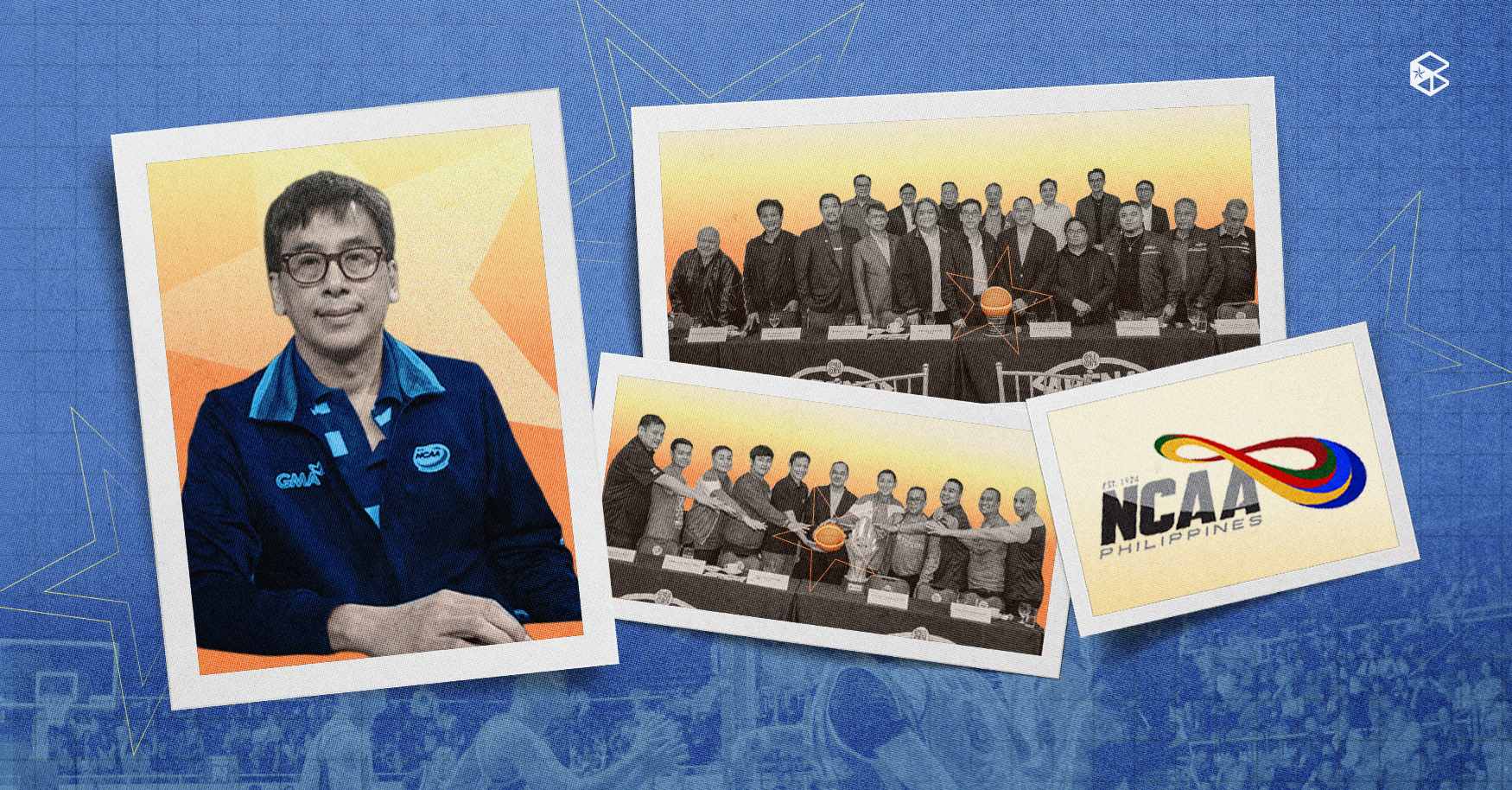




The National Collegiate Athletic Association (NCAA) amps up the competition with Management Committee Chairman, Atty. Jonas Cabochan, outlining several initiatives focused on expanding opportunities and intensifying competition across the league in the NCAA Season 102 Basketball Tournament Press Conference on Aug. 31 at the Mall of Asia Arena in Pasay City.
In an interview with Sports On Air, Cabochan, of host school San Beda University, encouraged the public to support the league’s sports and student-athletes, stressing that stronger support can create greater opportunities for student-athletes and help pave the way for their success in international competitions.
He also shared that Season 102 will continue to feature golf and gymnastics as demonstration sports, following its introduction last season and possible additions of the NCAA’s sports lineup.
“For this season, itutuloy natin ‘yung demo sport last season na golf and gymnastics, at gaya ng sabi ko kanina dadagdagan pa natin ng weightlifting at tsaka ‘yung boxing pinag-aaralan.”
Furthermore, Cobochan discussed the news about the league’s possible expansion. He expressed appreciation for schools interested in becoming part of the league, but emphasized that the administration will need to carefully evaluate the inclusion of potential member schools to ensure any expansion would benefit all stakeholders.
Another notable change comes in the league’s coaching rules, where he addressed concerns about coaches handling teams in both the NCAA and professional leagues. He confirmed that the NCAA has removed the rule that previously prohibited head coaches from handling teams in both leagues simultaneously.
“Wala na, tinanggal na ‘yung rule na ‘yun. So, kahit coach ka ng PBA, pwede ka nang mag-coach sa NCAA,” he mentioned. With the rule no longer in place, coaches such as Charles Tiu of the De La Salle-College of Saint Benilde Blazers and Jerson Cabiltes of Emilo Aguinaldo College Generals, who currently serve as head coaches in the PBA and MPBL teams, are cleared to work alongside their respective NCAA squads this season.
Moreover, the league will retain last year’s group setup, but with one key change: fourth-seeded teams are granted a twice-to-beat advantage in the play-in round. The top three teams in each group will advance to the quarterfinals, with the top two seeds also holding the twice-to-beat edge, while the fourth and fifth-seeded teams face off in the play-in.
According to Cabochan, the new provision will give teams greater incentive to avoid finishing at the bottom of their respective groups. Every team will have the opportunity to compete in the play-in round, rather than facing early elimination. “We hope to increase the level of competition,” he added.
Welcoming the season with changes both on and off the court, the NCAA continues to explore ways to expand opportunities for its student-athletes while raising the level of competition. Through these efforts, Season 102 sets the stage for another season of growth and opportunities aligned with the league’s initiatives that reflect its push toward a more competitive and inclusive future.
