
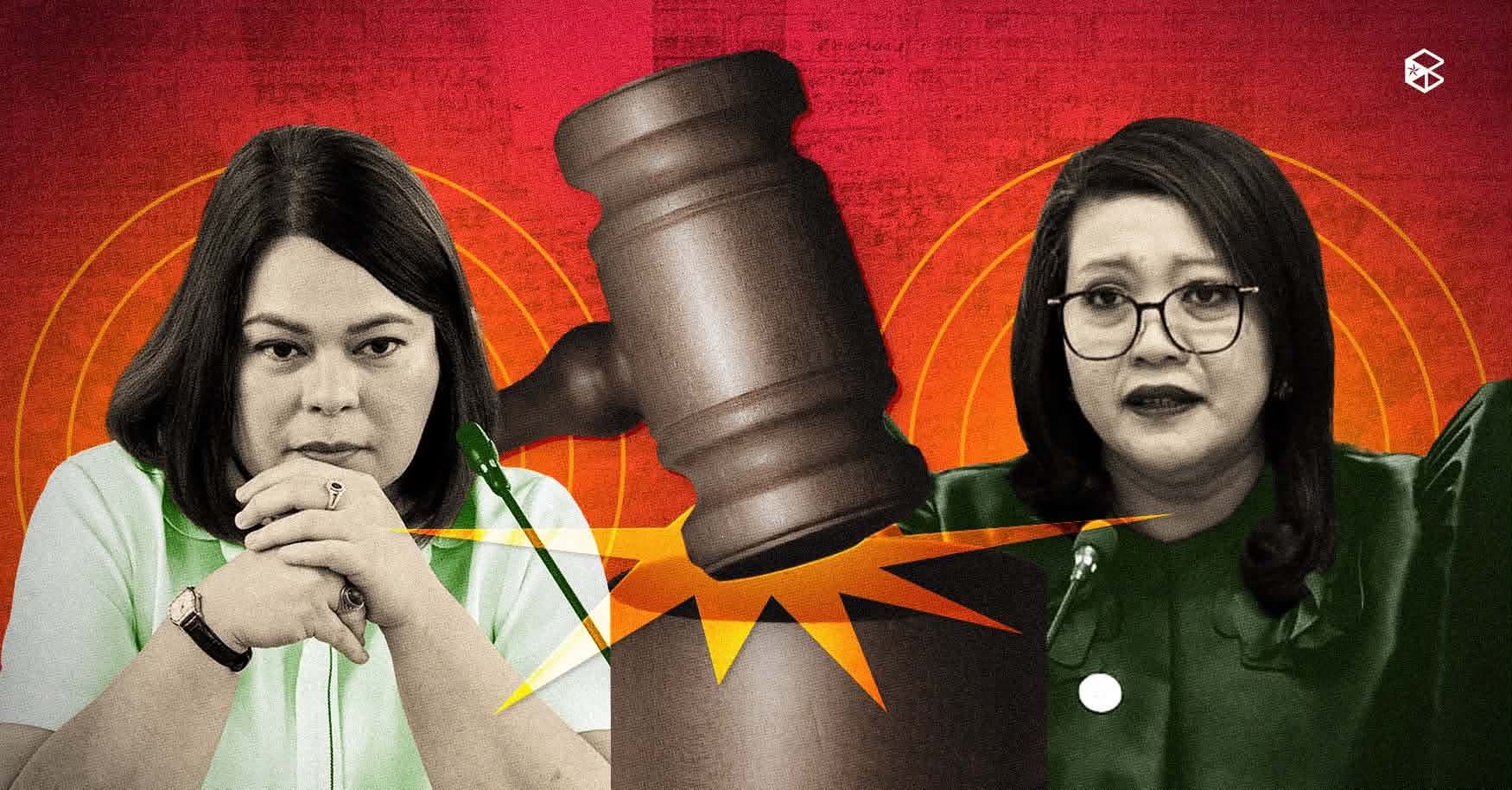




Every impeachment trial tests more than the official standing at its center. It also tests whether the institutions tasked to uphold the Constitution can remain guided by evidence, due process, and public accountability amid political division. The opening weeks of Vice President Sara Duterte's impeachment trial placed that test squarely before the Senate.
The Senate formally convened as an impeachment court on July 6 for Vice President Sara Duterte, with Senator Francis Joseph “Chiz” Escudero presiding despite more than an hour of objections from Senators Alan Peter Cayetano and Pia Cayetano. The proceedings opened with Article IV of the impeachment complaint, accusing Duterte of issuing assassination threats against President Ferdinand Marcos Jr., First Lady Liza Araneta-Marcos, and former House Speaker Martin Romualdez through statements made in October and November 2024.
Hours before the trial began, Duterte skipped the opening session to attend preparations for Super Typhoon Bai, according to Defense spokesperson Michael Poa. House prosecutor Gerville Luistro described Article IV as the gravest among the four impeachment articles, saying it "strikes more directly at the heart of constitutional order."
Unlike many impeachment proceedings that hinge on conflicting testimonies, the prosecution's case rested largely on Duterte's own publicly recorded statements. The impeachment trial unfolded amid a deepening political rift between the Marcos and Duterte camps, as every exchange inside the Senate chamber carried implications beyond the courtroom.
For supporters and critics alike, the proceedings became more than a legal exercise; they reflected broader questions on accountability, political power, and the standards expected of the country's second-highest elected official.
Article IV unfolded around statements made publicly by Duterte herself. As a result, much of the trial's opening phase shifted away from proving whether the remarks were uttered and instead centered on a narrower legal question: whether those statements constituted protected political speech or an impeachable offense under Philippine law.
Two competing narratives
The defense, however, framed the impeachment as politically motivated. Defense counsel Sheila Sison emphasized that Duterte was elected by more than 32 million Filipinos—more votes than President Marcos Jr. or any of the House prosecutors—and accused the House Justice Committee of conducting a "mini trial" by allegedly curating evidence before transmitting the articles to the Senate.
On July 7, Duterte briefly appeared before the impeachment court, declaring herself "bloodied but unbowed" before leaving to meet with her legal team. The prosecution then presented its first witness, NBI Senior Agent John Mark Calilung, who authenticated video recordings of Duterte's October and November 2024 statements.
Among the clips presented were Duterte's remarks on wanting to behead Marcos and instructing someone to kill the President, the First Lady, and Romualdez should anything happen to her. Prosecutor Lorenz Defensor argued that the statements carried greater constitutional weight because they came from the country's second-highest elected official.
“Her words were neither accidental nor taken out of context. They were uttered publicly with the intention to be taken seriously,” said Defensor.
The prosecution's second witness, NBI Regional Director Jeremy Lotoc, testified on July 13 that the Bureau found sufficient basis to investigate Duterte for grave threats after she publicly admitted speaking to a supposed assassin. He maintained that such statements were not protected by freedom of speech because they satisfied the elements of grave threats, including a threat to inflict harm.
The hearing also exposed the parties' contrasting narratives. The prosecution compared Duterte's statements to the 2020 case of public school teacher Ronnel Mas, who was charged after posting a bounty against former President Rodrigo Duterte.
The defense, on the other hand, insisted no actual assassination plot had been carried out and announced it would present witnesses to support the existence of Operation Romanov, an alleged plot against Duterte and her family.
By this stage of the proceedings, the prosecution and defense had settled into two competing narratives. While prosecutors framed the case as one of accountability for public statements made by a constitutional official, the defense sought to reposition the controversy within the broader political conflict between the Marcos and Duterte camps. The repeated references to Operation Romanov reflected an effort to shift attention from the alleged threats themselves, and toward the circumstances that, according to Duterte's camp, prompted them.
Where words crossed the line
On July 14, senator-judges shifted their attention to the legal definition of grave threats. Sen. Pia Cayetano questioned whether the offense required the intended victim to have actually felt fear, prompting prosecutor Amando Virgil Ligutan to cite Supreme Court rulings that intent—not the victim's reaction—was sufficient to establish the crime.
Lotoc agreed, saying the NBI found a pattern across Duterte's October and November 2024 statements that suggested intent. However, he acknowledged that the Bureau's findings relied on Duterte's public statements and admissions, as identifying the alleged assassin was beyond the scope of the Cybercrime Division's investigation and would instead fall under the NBI's Intelligence Service.
Lotoc also testified that the NBI classified Operation Romanov as unvalidated information after tracing its earliest public mention to Davao City Mayor Sebastian "Baste" Duterte. He added that the individual publicly known as "Princess Maui," who warned Duterte about the alleged plot during the November 2024 press conference, never appeared before the NBI despite being invited to explain her claims. Sen. Alan Peter Cayetano, however, argued that Baste Duterte's remarks should be viewed as a warning rather than a threat, saying there was "a thin line between a warning and a threat."
Beyond the legal questions surrounding Duterte's statements, the trial's opening weeks also highlighted the Senate's dual role as both a political institution and an impeachment court. While some senator-judges focused on clarifying legal standards and courtroom procedure, others drew attention for their questioning, which closely echoed arguments raised by the defense. At the same time, repeated calls to accelerate the proceedings reflected growing concern that procedural debates could overshadow the impeachment court's responsibility to resolve the charges efficiently.
As the first phase of the trial drew to a close, the prosecution withdrew two remaining witnesses after confirming that Calilung and Lotoc had authenticated all 64 documentary exhibits. The decision came amid growing calls to expedite the proceedings, with Senate President Sherwin Gatchalian warning that the trial could last up to 17 months at its current pace. He urged both parties to streamline their presentations as the impeachment court prepared to hear arguments on the prosecution's subpoena requests.
The trial can be followed through livestreams and live updates from GMA News, Inquirer.net, and the Senate’s official channels. The next hearing is scheduled for Tuesday, Aug. 11, with proceedings expected to resume at 10 a.m.
