
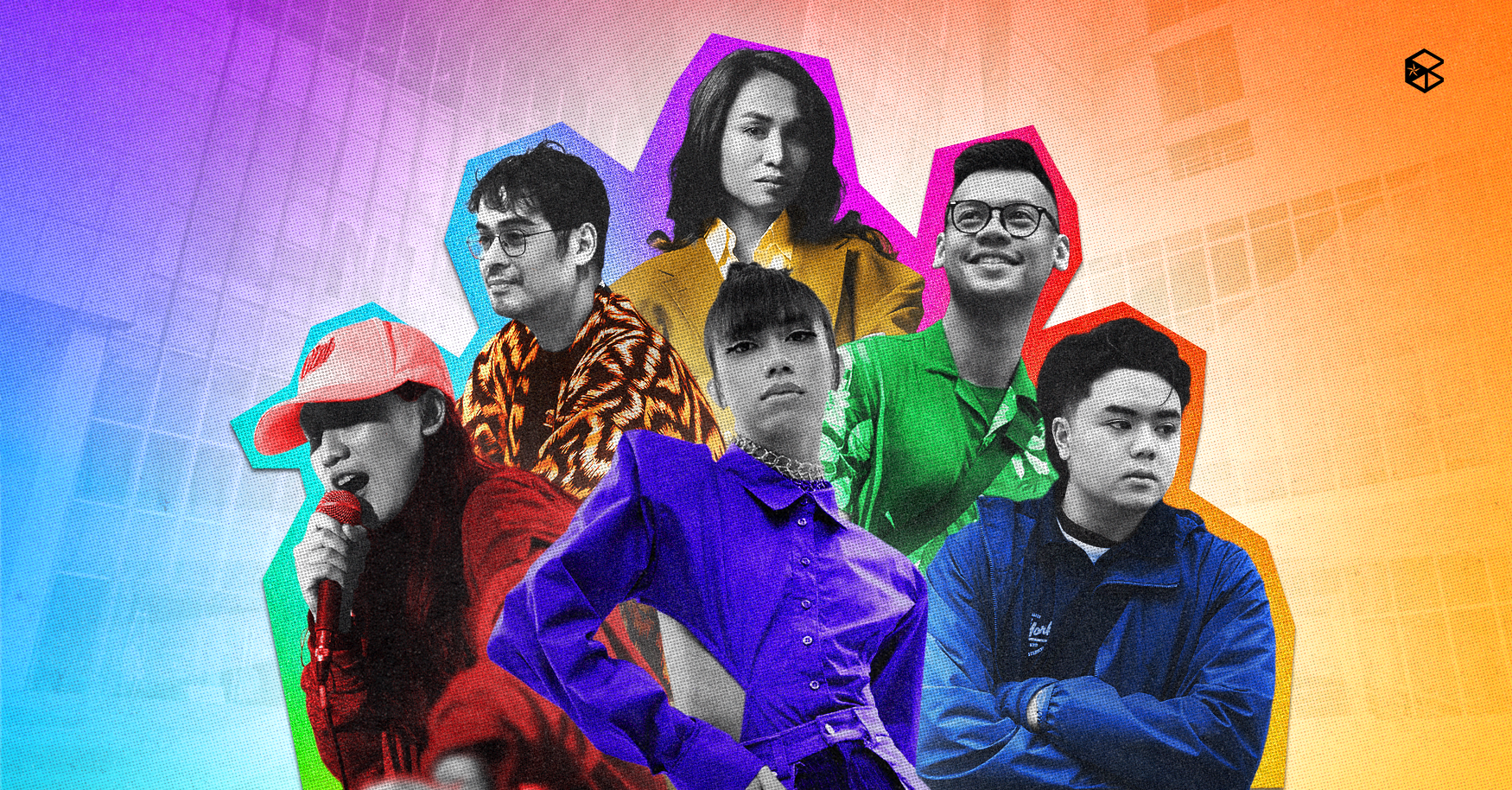




Queer visibility in the Philippines has never belonged to a single person or movement. It has been built gradually by people working in different corners of culture—on stages, in classrooms, on runways, online, and behind cameras. Some become public figures, while others help build institutions. All of them, intentionally or otherwise, expanded what queer life could look like in the public imagination.
Benilde has produced more than a few of these figures. Across varying fields, queer Benildeans have carved out space for themselves while paving the way for others. The following stories trace six different paths, but together, they offer a kaleidoscope of the many ways queer Filipinos continue to leave their mark on contemporary Philippine culture.
This Pride, here's a look at the names worth knowing and the legacies they are still writing.
Mimiyuuuh
Before “Skrrrrtttt!” became a national catchphrase, Mimiyuuuh was just another Benildean working as an ID113 student assistant to help pay for her Fashion Design and Merchandising (AB-FDM) degree. But today, she’s one of the most recognizable faces in the Philippines’ internet culture.
Her breakout moment came in 2019 following a lipsync video to ALLMO$T's "Dalaga," which sparked a nationwide challenge. From there, things snowballed fast. She built a massive following across YouTube and TikTok, eventually stepping into music and dropping her debut single “DYWB (Drink Your Water B*tch)."
Fashion never really left the picture for Mimiyuuuh. Staying true to her Benildean acumen, Mimiyuuuh launched “Fangs,” her own streetwear line that has since appeared at Manila Fashion Week and international shows. Adding to that, multiple brand deals with Lazada, television guestings, and hosting gigs reveal that her reach goes beyond any single platform.
Mimiyuuuh stands out for her openness. She speaks casually about her queerness the same way she talks about everything else, and in an industry that often demands its most visible figures to manage how they’re perceived, Mimiyuuuh’s choice to be unfiltered makes her a representative of a generation that values authenticity over perfection.
Wanggo Gallaga
Wanggo Gallaga was raised around storytelling, being the youngest child of legendary director Peque Gallaga, the mind behind “Oro, Plata, Mata.” But Gallaga built his own name as an essayist, cultural writer, and film critic, with bylines in The Philippine Star's Young Star section and Lifestyle.INQ. He's also a Benildean educator, teaching screenwriting under the School of Design and Arts' Film Program.
In 2008, Gallaga was diagnosed with HIV, which later progressed twice into AIDS-related complications, including meningitis. Instead of staying quiet, he went public—becoming one of the first Filipino public figures to speak openly about living with HIV on mainstream television, most notably on ABS-CBN’s “The Bottomline with Boy Abunda.”
One could argue that his openness was political as much as it was personal. Gallaga has spoken candidly about safe sex, and how antiretroviral therapy allows people with HIV to live healthy lives. He’s also acknowledged his privilege, a supportive family and access to healthcare—things not a lot Filipinos have. With his platform, he continued to push for institutional support and an end to workplace discrimination for people with HIV.
Gallaga's advocacy shines a light on the power of refusing to perform either tragedy or triumph. He didn’t frame his diagnosis as a cautionary tale or a redemption arc but merely just a reality he lives with and uses to make space for others. His willingness to speak publicly about HIV challenged long-standing stigmas surrounding the condition in the Philippines, particularly at a time where conversations about sexual health remained limited in the mainstream.
BP Valenzuela
Before "lo-fi bedroom pop" became a buzzword, Ms. BP Valenzuela was already making it from her actual bedroom. She didn’t start out at the College, enrolling first at Ateneo de Manila University and eventually transferring to DLS-CSB’s Music Production (AB-MP) program as an ID114.
Her debut EP “be/ep” (2014), featuring "Building," put her on the map. The follow-up, “The Neon Hour“ (2015), captured a specific feeling—late-night city drives and vague relationships. Songs like "Steady," used in the film Sleepless, "Pretty Car," and "bbgirl" with No Rome and August Wahh became staples of the local indie scene. She's since branched out under the ambient moniker half-lit and DJ alias sl33pypasta—scoring films along the way.
Valenzuela has been openly queer for most of her career, and it naturally lingers in her music. Her songs sit with identity—treating it as something lived in rather than performed. With each song released, BP continues to build an intimate catalogue anchored in the same sensibility that first emerged from that bedroom in Manila.
Veejay Floresca
Veejay Floresca, an ID102 AB-FDM alumna, placed third on the very first season of “Project Runway Philippines” in 2008. She later moved to the U.S, and after years of audition rejections to participate in the program, she broke through, as a runner-up on Hulu’s “Dress My Tour" in 2024. A different start to what she imagined, but a start that led to her historic win on “Project Runway” U.S. Season 21—becoming the first Filipino and first openly transgender woman to take the title.
Her defining moment at Benilde didn’t happen on a runway. In 2015, she was denied entry to Valkyrie, a high-end Taguig nightclub after a bouncer dismissed her California ID and told her she was still a man. The incident sparked national outrage, with figures like Vice Ganda threatening to pull his shares from the club. Valkyrie issued an apology and lifted its "no cross-dressing policy" altogether.
Instead of framing it as a personal grievance, Floresca used it as a moment to be a voice for others. Proving her tenacity, she continues to push for gender equality and the SOGIE Equality Bill in the Philippines—looking past the institutions who failed her and moving forward by learning how to work with them.
Paolo Bustamante
Before Benilde Hive (BHive) became the organization it is today, it was just a Facebook page kickstarted by Paolo Bustamante, an ID110 Multimedia Arts (ABMMA) graduate from Benilde, as a space for LGBTQIA+ students to talk, vent, and find each other.
The small online space grew into Benilde Hive, the first accredited LGBTQIA+ student organization in the entire De La Salle Philippines system. From a simple digital community, it transitioned into a physical presence on campus—organizing safe space discussions, human rights education programs, institutional pushes for SOGIESC policies, and the annual Benildean Pride March.
Bustamante’s early work with BHive reflected a deliberate institution-building where he created a place for queer students to freely and safely exist. Every Benildean who has found community through BHive, whether they know his name or not, is standing on something he started from scratch.
Vahn Leinard Pascual
From Benilde thesis screenings to the Criterion Channel, Vahn Pascual has spent his early years proving that queer stories deserve the same reverence as myths.
The ID119 Benilde Film (ABFILM) program alum is known for blending silent-film aesthetics, black-and-white visuals, and Philippine folklore into stories about love, identity, and survival. His breakout film, “The Gossips of Cicadidae” (2022), follows a boy destined to become his town’s folk healer who falls for a Tikbalang. Making it to the Criterion Channel under its New Independent Philippine Cinema program—a rare feat for a young Filipino filmmaker.
He followed it with “My Dearest Darling”—the story of a 60-year-old transgender woman finding peace by revisiting memories of her late lover. The film screened at festivals including the San Diego Asian Film Festival. Pascual's work has earned him recognition from the Cultural Center of the Philippines' Gawad Alternatibo and a national Ani ng Dangal award from the National Commission for Culture and the Arts, putting him among the most decorated young filmmakers in the country.
Overall, his works are significant because of who he chooses to center—old transgender women, queer folk healers, and characters who rarely become the heart of the story. His films give queer Filipinos a place in stories that feel dignified and overdue.
Taken together, these Benildean figures demonstrate that LGBTQIA+ representation is not confined to a single field or form of expression. They have all contributed to expanding the visibility of queer Filipinos in contemporary society and each achievement reveals how authenticity and advocacy can intersect to create meaningful change within their respective industries.
As members of the Benildean community, they embody the institution's commitment to inclusion and doing ordinary things extraordinarily well. Their legacies serve as reminders that progress is built by individuals willing to live openly, tell their stories, and make room for others to do the same.
So here's to the ones who made it easier for the next generation, intentionally or not.
