




De La Salle-College of Saint Benilde concluded its observance of Women’s Month 2026 with a month-long series of activities centered on gender equality, safe spaces, and inclusive leadership. Carrying the theme “Breaking Bias, Building Balance,” the celebration brought together students, associates, educators, administrators, and community partners in programs designed to promote awareness, reflection, and action. The initiative served as a continuing call to build a more gender-responsive community.
The observance opened on March 2 with the Women’s Month Exhibit at the Atrium Lobby. The opening program formally launched the month-long campaign and introduced its key messages and activities to the community. A mini-exhibit featuring Safe Spaces Act-related artworks and outputs was also mounted as part of the opening, setting the tone for a celebration focused on inclusion, dignity, and shared accountability.
Also launched that day was “Draw the Line 2.0: An Exhibition on Safe Spaces Act,” mounted by the Office of the Vice President for Lasallian Mission and Student Life (OVPLMSL) in partnership with the Center for Restorative Discipline (CRD), the Benilde Center for Campus Exhibitions (CCX), and the Center for Social Action (CSA). Featuring artworks and creative outputs by student volunteers, the exhibit translated advocacy into visual form and invited viewers to reflect on respect, safety, and the responsibility to create safer spaces in the community.
On March 6, a webinar session led by CSA titled “AdbokaSerye: Usapang Kontra Karahasan sa Kababaihan,” gathered barangay partners for a discussion on violence against women and children, with the College’s Gender and Development (GAD) focal person, Ms. Nicole Trisha Panganiban, as the resource speaker. By bringing together local partners and focusing on women’s rights and gender-based violence, the forum linked Benilde’s Women’s Month advocacy with community education and public engagement.
On March 9, the People and Organization Development Office (PODO) and the Center for Emergency Management, Safety and Security (CEMSS) conducted “GAD to Be Safe: Self-Defense Training for Associates and Students” at the Learning Commons. The training aimed to promote safety, preparedness, and empowerment among participants.
Also on March 9 and 10, the School of Deaf Education and Applied Studies (SDEAS) mounted its Women’s Month celebration for the Deaf community at the Augusto-Rosario Gonzalez (ARG) Theater. The proposal described the event as a short play highlighting women’s empowerment, safe spaces, and gender equality in the Deaf community. In the event materials, this took the form of “Her Story: Deaf Women’s Journey,” performed by the Deaf theatre group Silent Steps, portraying the journeys of Hagar, Ruth, Tamar, and Mary.
Student leadership was the focus on March 10, when CRD held “Gender-Responsive Leadership: Empowering Advocates for Safe Spaces and Mainstreaming” at the Ideation Room, Atrium Campus. The seminar-workshop was designed to equip student leaders with practical knowledge and skills for fostering a gender-fair and inclusive environment through plenary inputs, circle discussions, and a commitment circle. In the event proper, the session on safe spaces was led by Ms. Panganiban, while the restorative circle was guided by CRD Discipline Officers led by CRD Director Ms. Norie Ador Dionisio. Her role gave the session a strong restorative dimension, grounding its message of leadership in accountability, reflection, and care.
On March 16, advocacy took on a more interactive form through the “Carnival of Equality: GADvocacy Fair” at Greenway Taft Campus. Organized by CRD, CSA, BeSG, student organizations, and volunteers, the event was designed as a colorful and interactive fair that promoted gender awareness through experiential learning. Activities such as stereotype-breaking games, quizzes, and pledge-making exercises made concepts such as equality, inclusion, diversity, empowerment, and respect more accessible to participants.
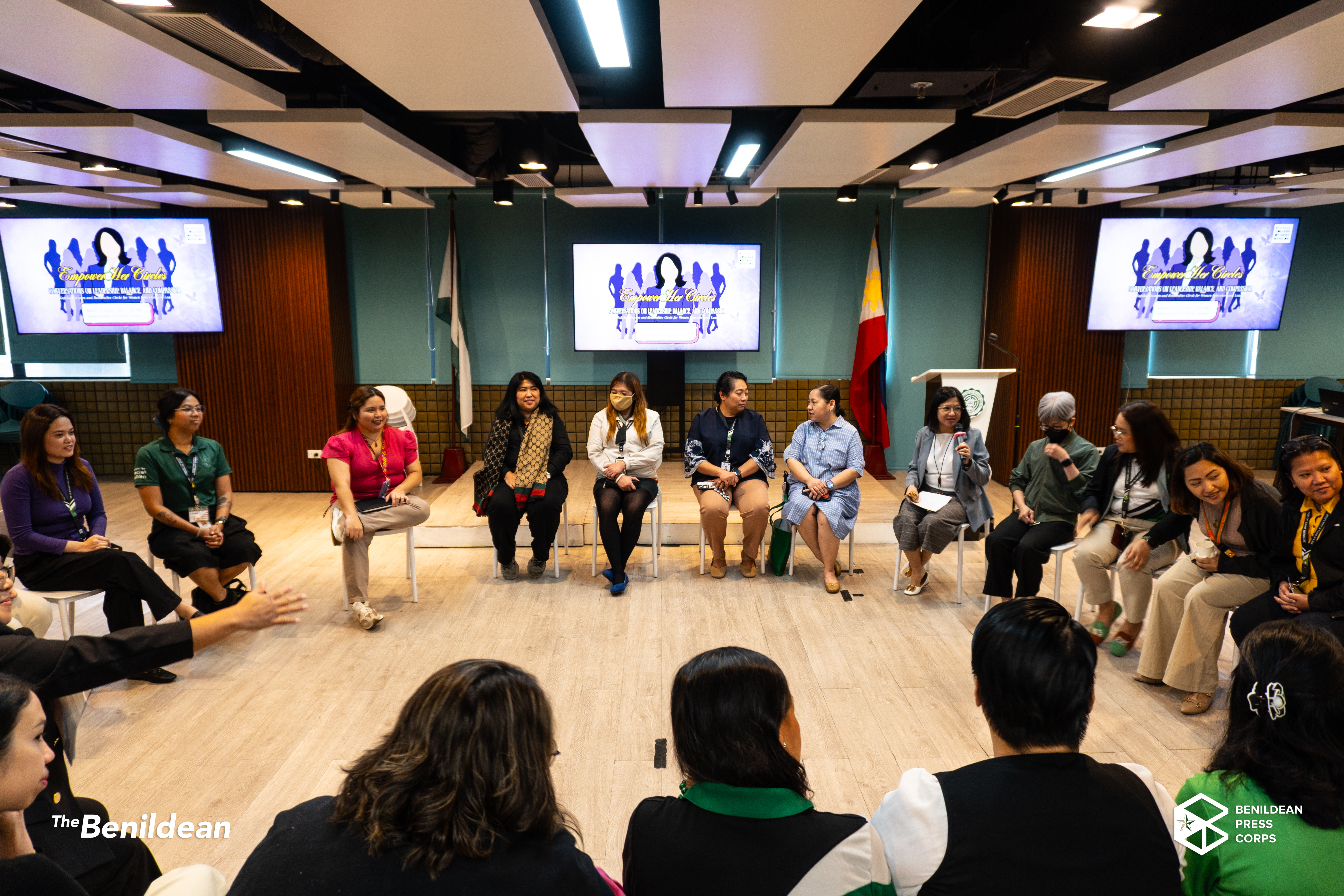
A more intimate gathering followed on March 17 through “EmpowerHER Circles: Conversations on Leadership, Balance, and Compassion.” Held at the Ideation Room, the session was envisioned as a reflective kapihan and restorative circle for women educators and leaders. It aimed to provide a safe space for sharing experiences, challenges, and strengths in leadership, with the expected outcome of strengthening support systems, empowerment, and restorative leadership among women educators. In the event proper, the conversations and restorative circle were facilitated by Ms. Ador Dionisio and Ms. Vanessa Napoles, Head Librarian of the Technical Services Unit, which helped shape the gathering into a space of listening, sisterhood, and support.
On March 18, “Writing as Witnessing: Critical Insights and Reflections on Women’s Narratives,” a BookTalk hosted by the Center for Learning Resources (CLR) at the Learning Commons, 8/F, Design and Arts (D+A) Campus. The session focused on women’s stories, empowerment, and gender equality. In the event materials and post-event content, it featured Ms. Irish Joy G. Deocampo and explored how women’s narratives and scholarly writing can document lived experience, challenge bias, and amplify voices.
The Women’s Month program also included a March 19 learning session on Gender and Development in the Context of Students with Specific Learning Needs, widening the conversation through a more inclusive lens. Beyond the scheduled events, the celebration was supported by month-long efforts such as the Safe Space Spot: Stickers/Decals Campaign, broader marketing support, and the sharing of GAD and women’s empowerment resources, all of which helped sustain the campaign’s visibility across campus.
The Women’s Month activities reflected the College’s effort to move from awareness to action. Some programs focused on policy, rights, and prevention. Others emphasized leadership formation, practical safety skills, creative engagement, storytelling, and restorative dialogue. What connected them was a shared effort to turn the language of gender advocacy into everyday practice across campus and partner communities. The celebration's intended outcomes included a stronger understanding of women’s rights and safe spaces, wider awareness of gender bias and gender-based violence, and deeper community engagement in GAD advocacy.
As Women’s Month 2026 came to a close, Benilde’s campaign left behind more than a calendar of activities. It left a challenge to the community to make gender equality, inclusion, and safe spaces part of ordinary campus life. The celebration affirmed that meaningful change is sustained through education, participation, and shared responsibility.
