
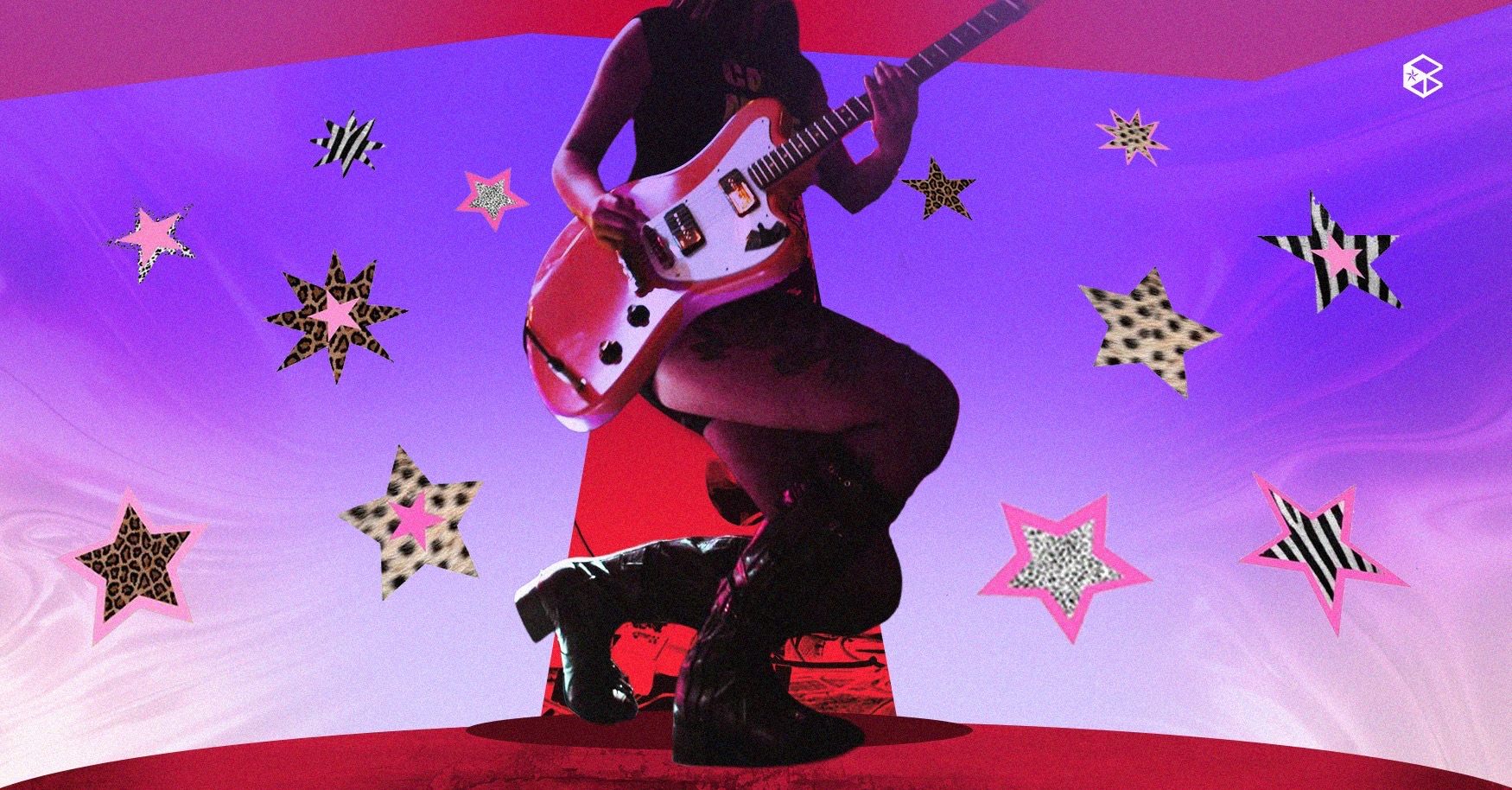




Women in Filipino music have a limited cultural reputation in the mainstream. Often, women are stereotyped either as pop princesses or musically unambitious singer-songwriters. Metro Manila’s underground music scene tells a different story. All different sorts of women keep the Filipino music scene alive, even when it’s difficult.
Metro Manila’s independent music scene is deeply important to its artists and supporters. For many women, the scene isn’t just a hobby, but a second home. It is not only a staging ground for almost all popular Filipino music movements, but also a place of comfort for many Filipinos who feel they do not completely fit in with mainstream culture.
For Mikey, a staple events photographer in indie shows, Manila's independent music scene provides a physical community space where anyone is welcome. They told The Benildean, “If you’ve heard of the concept of third spaces, that’s what the local scene is for me… What’s great about being a girl in the scene is [...] being able to meet and bond with other women in the same scene is such a beautiful experience.”
Kaye—an ID123 student from the Music Production (BA-MP) program—is a vocalist for her band also called K which blends multiple genres of progressive heavy-metal to create theatrical ballads. In the scene, Kaye said, “Being local artists, the scene is what we rely on to strive and to gather our crowd. It’s because of them we continue to be inspired by writing and performing. Looking at our crowd reminds us that wherever and whenever we started, our music served as a connection.”
A safe space, in progress
Izzy is a veteran of Manila’s independent music scene, having witnessed the rise of bands like Ben&Ben from indie darlings to national stars. She records music of a punk ethos under the name izzy mariano.
For her, a safe space is always in progress. “There is no 100% completely safe space anywhere.” Izzy said that growing up in the music scene, she had her fair share of experiences with men in the scene abusing their power and harassing women. It left her dejected about how the underground treated women and queer people. Eventually, Izzy found her footing, “Along the way, I was able to find really good and genuine people. I really think that the people who try to make [the music scene] a safer place are doing really well [now].”
Minka—an ID124 student of the Industrial Design (BS-ID) program—is a multidisciplinary artist. She’s an experimental electronic musician under her own name, a visual artist and graphic designer, and a proud member of the Sining Shelter music venue organization.
For Minka, being a woman in the scene has made her wary of where she goes. “[I’m] more intentional about the gigs I choose to support. As a [sexual assault] survivor, I look for a community that actually looks out for each other.” She says the music scene is on the right track regarding women’s safety, “We just need to keep being more intentional about it, and more consistent.”
Still, in spite of the negative experiences she shared, “The community that I’ve come to know and love is very warm and supportive. I’ve met my closest friends through the [music] scene. I feel like I’ve grown more as a person since becoming part of it, too.”
Unsung cultural pioneers
Women are often overlooked as musical pioneers, especially in the mainstream. Genre shifts led by women, such as punk rock’s “Riot grrrl movement,” are typically considered exceptions. Women are culturally expected to make safe and marketable music, as well as to be subservient to the men who own record labels. Women in Manila’s indie scene reject these expectations entirely.
Orteus is a fresh face to Manila’s indie scene in more ways than one. She’s not only been active in the scene for less than a year, but she’s one of a few artists in split:heaven, an electronic musicians’ collective performing within a local indie scene dominated by rock music.
Most Filipino electronic musicians opt to grow their platform through DJ work for Manila’s nightlife spaces. “I’m more confident in my producing abilities,” she admits. “[Though] I like that I’m performing now, even if people don’t know my music and even if my crowds are small, it’s fine. It’s important to me because I can actually show my music to [the] people around me.” Orteus is bringing a sharper and darker digital sound to a scene with a long tradition of dreamy analog rock, directly challenging what long-time fans expect from Manila’s scene.
Michelle has almost every job in the scene; she is the social media manager for the speakeasy bar and music venue Sari-Sari, she makes music under the names mayfly and Cheese Cries, and she’s the sole person in charge of the production house Cheddar Productions who organizes everything from rock shows to “Heated Rivalry-themed” parties.
Michelle works much more closely with the Filipino recording industry than most people in Manila’s indie music scene, and as such she finds herself at odds with the mainstream Filipino music industry’s patriarchal establishment when trying to uplift indie artists.
“Usually the room where important decisions are made or conversations are being had, it's usually predominantly men… [...] They're not really exactly going to welcome you with open arms,” she expressed in an interview with The Benildean.
Still, she remains undeterred in trying to get a woman’s voice in the room where it happens. She notes that men don’t initiate conversations with her. “There's a wall…But the thing is, I don't care about that wall. Break that wall.”
Women in Metro Manila’s independent music scene are more complex and diverse than mainstream Filipino music culture suggests. Women push cultural boundaries, keep spaces safe, and share a genuine love for independent Filipino music.
Despite the scene’s imperfections, everyone calls it home for a reason. In the words of Izzy, “There's so much good in being a woman in the scene, [...] in the sisterhood, [...] I really, genuinely, wouldn’t have it any other way.”
