
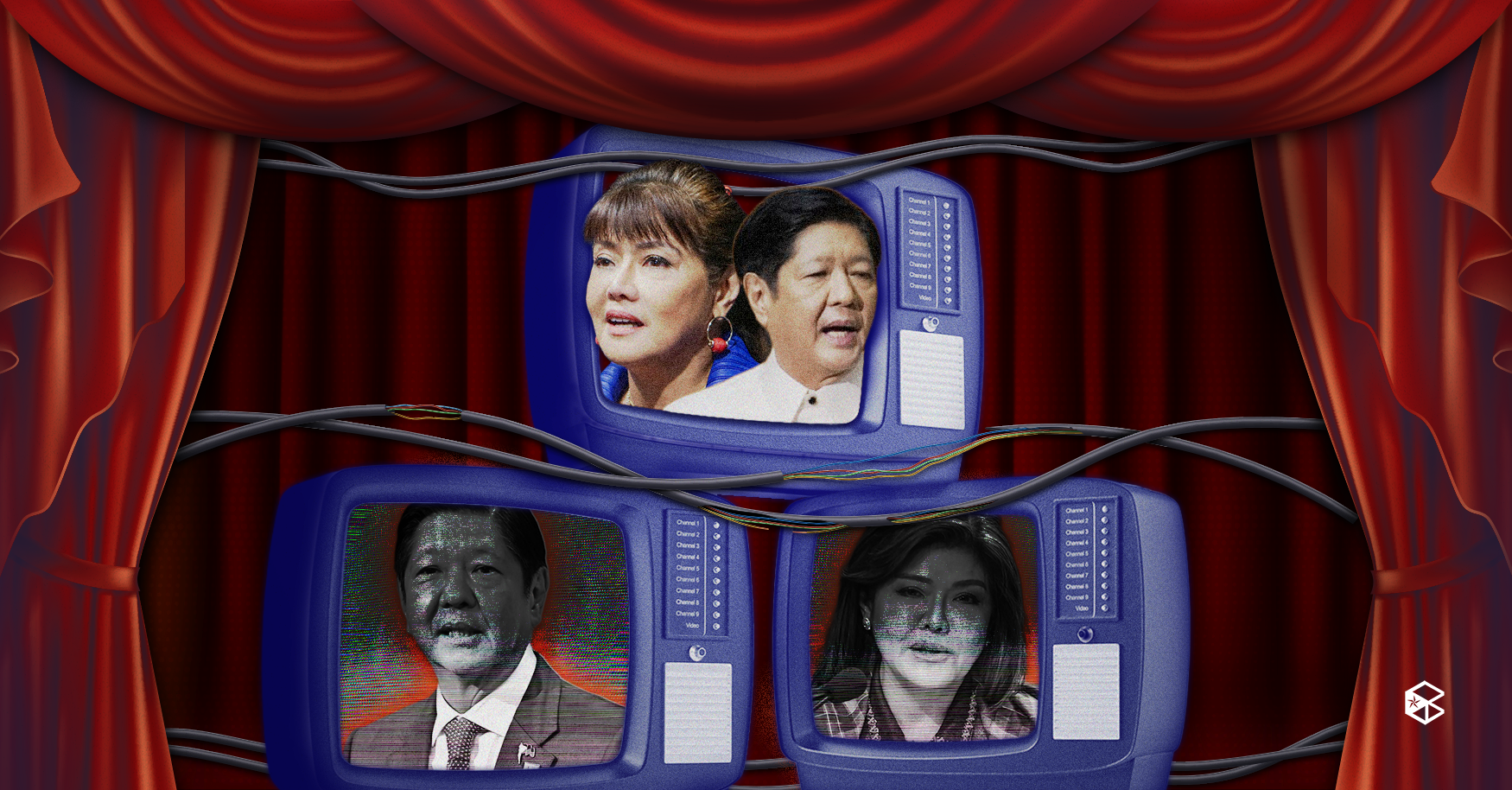




The political rift between President Ferdinand “Bongbong” Marcos Jr. (PBBM) and Senator Imee Marcos has extended far beyond the confines of their dinner tables, escalating into a national spectacle that reveals how a family dispute exposes the deep vulnerabilities of dynastic politics in the Philippines.
At the Iglesia ni Cristo (INC) anti-corruption rally held at the Quirino Grandstand in Manila on Nov. 17, Sen. Marcos dramatically shifted the focus from its stated theme of transparency and accountability to a personal attack against her own brother, PBBM. In front of a large crowd, she alleged that the president and members of the First Family were using illegal drugs.
In her address, she stated plainly, “Batid ko na, na nagda-drugs siya. Nalaman ko at ng pamilya, nalaman ng pamilya, seryoso ito,” asserting that the family had long been aware of the alleged issue.
Shortly after the allegations surfaced, Malacañang, through Palace Press Officer Undersecretary Claire Castro, rejected the older sibling’s claims as unfounded and politically motivated. The Palace described her statements as a “desperate move” and disputed the relevance of bringing up alleged drug use when the rally was meant to focus on corruption issues. According to Castro, the administration’s stance was that the allegations lacked evidence and were “baseless.”
On Nov. 18, House Majority Leader and presidential son Ferdinand “Sandro” Marcos issued a strongly worded statement condemning his aunt’s accusations. Sandro said he was speaking out “for the first and last time,” adding, “It pains me to see how low she has gone to the point that she resorts to a web of lies aimed at destabilizing this government to advance her own political ambitions.”
He emphasized that the allegations against the President, the First Lady, and himself were “not only false, but dangerously irresponsible.” He further asserted that there was no factual basis for the claims and urged the public to reject destabilizing narratives.
PBBM addressed the matter at a press conference on Nov. 24. Deflecting the accusation to a personal level, he framed the conflict as concerning his sister’s well-being rather than the substance of her claim.
Marcos Jr. said, “It’s anathema to me to talk about family matters generally in public. We do not like to show our dirty linen in public,” and added that “for a while now, we’ve been very worried about my sister… The lady that you see talking on TV is not my sister.” He also noted that he and Imee “no longer travel in the same circles, political or otherwise” when asked if they had communicated recently.
To which, hours later, Imee replied, “Bongbong, this is me. You are seeing things, brother. Prove me wrong, I want to be wrong.”
Building from this direct and personal public exchange, the feud mattered historically and in a broader sense because it exposes long-standing fractures within a political dynasty that has long relied on projecting unity as a cornerstone of its power.
For decades, the Marcos family’s strength rested on its ability to present a seamless front which is essential to defending the legacy of former dictator Ferdinand Marcos Sr. and sustaining their influence across national and local politics. By breaking that pattern, Imee’s unprecedented accusations and the administration’s pointed rebuttals reveal deeper ideological tensions and competing ambitions that have simmered since the post-EDSA years.
This matter signals that their internal conflicts, previously behind closed doors, are now spilling into the national stage, affecting not only their political strategy but also the broader climate of governance, succession, and public trust in the country.
What does this mean for the country?
Political analysts see the feud as more than personal animosity; they argue it speaks to deeper power struggles and legacy battles within one of the most entrenched political dynasties. In an article by the Philippine Star, Public policy analyst Mr. Dindo Manhit, suggests that Imee’s dramatic break from her brother—at a time when the administration is grappling with major corruption scandals—appears to be an effort to undermine his leadership and reshape political capital ahead of the upcoming 2028 elections.
The public nature of the spat has already affected governance optics. Sen. Ping Lacson publicly criticized Imee’s approach as very “un-Filipino,” stating that accusations of this magnitude should not be aired without evidence and risk undermining the already deteriorating public trust in the government.
Meanwhile, Prof. Froilan Calilung, a political science professor of the University of Santo Tomas (UST), observes that regardless of factual accuracy, perception management in politics can be as impactful as truth, influencing voter sentiment and weakening confidence in leadership.
Beyond the spectacle, the feud carries quieter and far-reaching consequences. It threatens policy continuity, as agencies and legislators may stall reforms tied to either sibling to avoid political fallout. The split disrupts the informal coordination networks that often keep Philippine policymaking functional.
Diplomatically, the rift complicates the country’s image. Foreign partners, already wary amid corruption controversies and regional tensions, may read the discord as instability at the top, tempering investment interest and security commitments. At home, long-time Marcos allies could begin recalibrating loyalties, while rival factions see an opportunity to amplify divisions and use the turmoil as leverage to weaken the administration further.
Ultimately, this childish feud further exposes the extreme fragility of dynastic governance. When power is concentrated within a family, internal conflicts inevitably seep into institutions, weaken administrative discipline, and reveal the absence of strong party structures capable of containing personal rifts. Left unresolved, the conflict only deepens factional rivalries and worsens partido politics. While the elites trade insults and protect their power, ordinary Filipinos are left to pay the heaviest price of their selfish infighting.
A striking aspect of this conflict is how preventable it is. In a more functional political system, internal disputes within a single family would not have the capacity to disrupt governance, foreign policy, or administrative morale. However, the Philippines centers its power within a dynasty rather than within stable parties and institutions.
As a result, the nation becomes hostage to the Marcos family’s internal dysfunction.
