
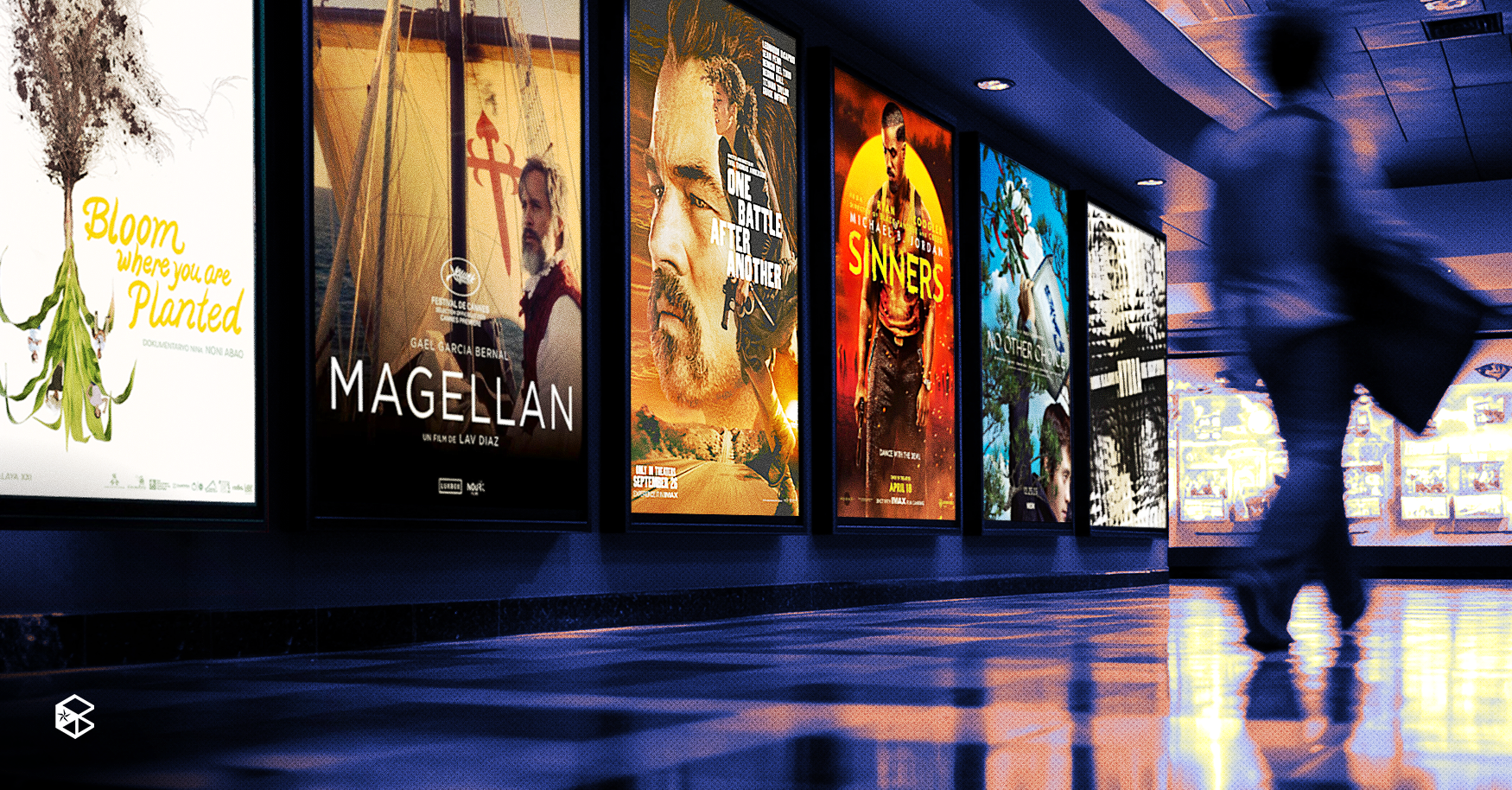




Merriam-Webster’s word of 2025 is slop. Oxford’s is ragebait. It’s hard to imagine a more fitting pair for a year where the internet’s loudest exports are friction and fog—content engineered to irritate, flatten, and exhaust, until nuance feels like a waste of bandwidth. In the middle of all that churn, ignorance no longer reads as incidental, while anti-intellectualism is starting to look less like an attitude than a destination we’re all being herded toward.
Against this backdrop of manufactured willful forgetting, the six films below arrive as acts of resistance. They are not an antidote in the naive sense—art can’t cure what ails us—but they are counterweights, proof that cinema still knows how to do what the algorithm cannot: demand sustained attention, refuse easy answers—to insist that some things are worth remembering even when forgetting would be more comfortable.
In a year defined by the erasure of nuance and the proliferation of brainrot, these six films offer something increasingly rare: art that treats intelligence not as a liability, but as a prerequisite for engagement.
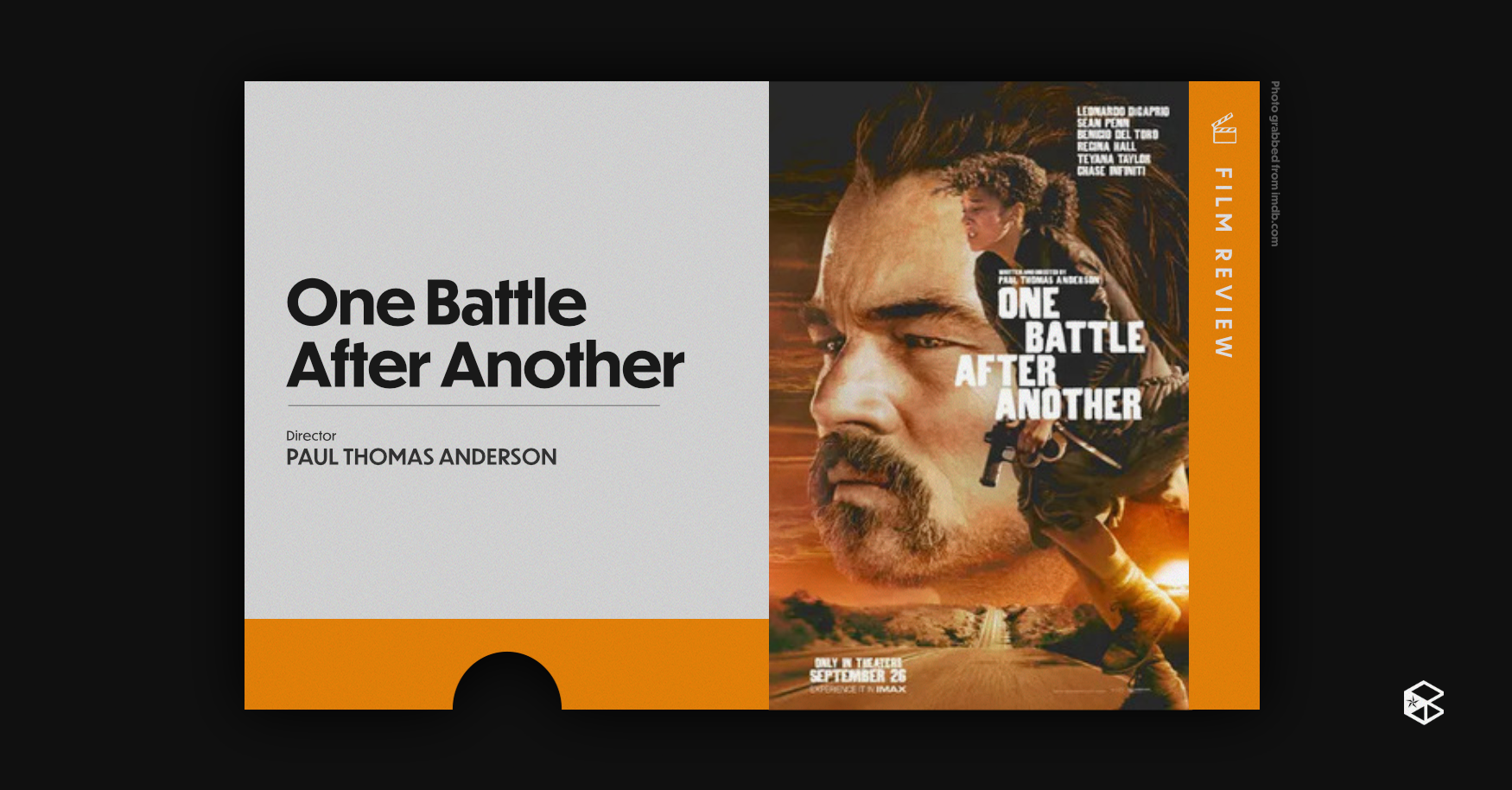
One Battle After Another
Layout by Hiro Odamaki
One Battle After Another detonates as Paul Thomas Anderson’s (There Will Be Blood, Boogie Nights) most ambitious and politically charged work: a darkly comic thriller wrestling with America’s unresolved radical past and its dystopian present. Written, directed, and co-produced by Anderson, the film delivers what many are calling his most entertaining and thematically dense film ever yet.
Loosely adapted from Thomas Pynchon’s novel Vineland, the story follows Bob (Leonardo DiCaprio), a washed-up former revolutionary living off the grid in seclusion with his self-reliant daughter Willa (Chase Infiniti). When his nemesis resurfaces after 16 years, and Willa goes missing, Bob is forced to reunite with his old comrades and confront the consequences of their radical past. Their adversary is the truly unhinged Col. Steven J. Lockjaw (Sean Penn), who wants nothing more than the power that men achieve when they're able to destroy everything around them—including history.
Anderson delivers his most politically charged film yet, blending genre thrills with genuine philosophical weight. What truly elevates the film is its refusal to simplify, Bob isn’t merely boxed as a hero reborn, but presented as a broken idealist forced to reckon with how little past rebellion actually changed. The father-daughter dynamic between Bob and Willa also beautifully showed how revolutionary ideals get transmitted, and reimagined across generations.
The film accurately captures this specific exhaustion of 2025—activists aging out of movements, younger generations inheriting battles they didn't start, and authoritarian figures who've learned that you don't need to crush resistance when you can simply erase it from collective memory. Yet Willa’s refusal to accept her father’s defeat encourages something stubborn and relentless about the human impulse toward justice, even when the odds are stacked against you.
Bloom Where You Are Planted

Layout by Hiro Odamaki
Directed and written by Noni Abao (Cleaners, Yung Huling Swimming Reunion Before Life Happens), Bloom Where You Are Planted became the first documentary to ever win Best Film at Cinemalaya, the Philippines’ leading independent film festival.
Six years in the making, the project’s origin begins in 2019, when Abao learned of the assassination of Randy Malayao. The film initially began as a focused portrait of Malayao’s life, bloomed to encompass two other land rights activists whose fates became intertwined with the violence of the Philippine state.
The documentary follows three land rights activists contending with the volatile notions of home amid terror and red-tagging in the Cagayan Valley: Agnes Mesina, a development worker pursued by the government and charged with terrorism financing; Amana Echanis, a jailed mother, peasant organizer, who was illegally arrested in December 2020 on charges of illegal possession of firearms and explosives; and Randy Malayao, a peace consultant gunned down on a bus in 2019 while traveling home.
Their stories converge in the fertile Cagayan Valley, a region rich in resources yet tormented by poverty and state violence against those who dare to organize with farmers and indigenous communities. The film was shot with documentary intimacy, refusing to abstract its subjects into just martyrs or symbols. Instead, it captures them eating chicharon, singing badly, hugging their children—ordinary people making extraordinary sacrifices for land, and peace in a nation that brands them terrorists for defending the dispossessed.
Furthermore, what makes this film relevant is how it refuses to treat activism as separate from parenthood, from daily survival, from the ordinary human need for safety and belonging. In a political era where dissent is increasingly criminalized and governments deploy surveillance to discredit those fighting for justice, the film insists on a simple truth: activists are neither abstractions nor threats, but are just people choosing to fight for a better world despite knowing the consequences.
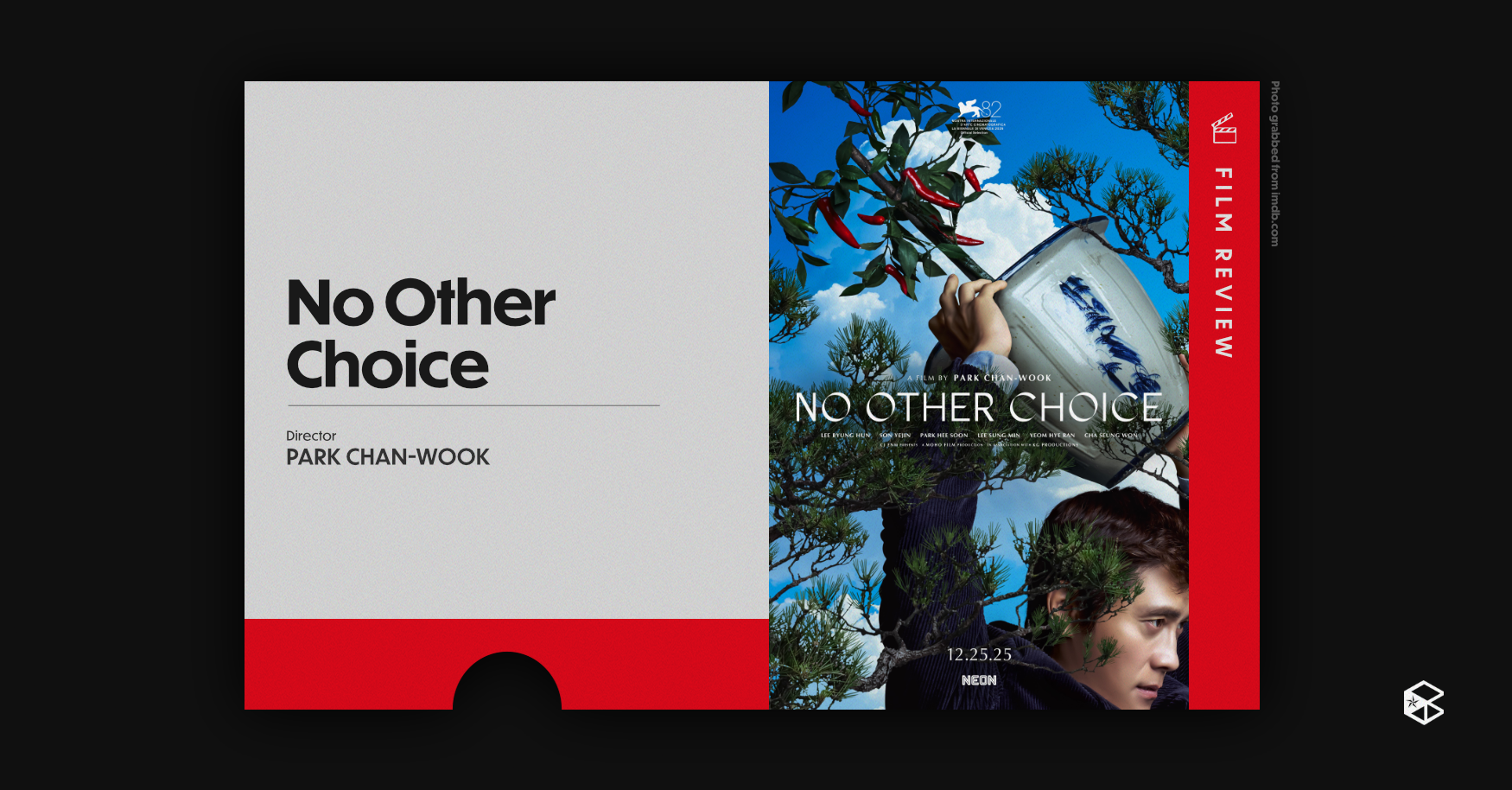
No Other Choice
Layout by Hiro Odamaki
No Other Choice erupts as Park Chan-Wook’s (Oldboy, Decision to Leave) most diabolical and darkly hilarious work yet—a satirical black comedy thriller that earned a rapturous six-minute standing ovation at the 2025 Venice International Film Festival. Adapted from Donald E. Westlake’s novel, The Ax, the film delivers what many are calling Chan-wook’s masterpiece— high praise from the director behind The Handmaiden.
The story follows Man-su (Lee Byung-hun), a veteran paper manufacturing manager, who seemingly has it all: a loving wife (Son Ye-jin), two children, when he’s abruptly laid off after 25 years of loyal service, Man-su’s hunt for employment turns into something far more sinister. After months of fruitless job applications in a market that has rendered him obsolete, he arrives at a sinister solution: eliminate his competition. Literally.
In 2025, as automation and corporate restructuring transforms entire professions obsolete overnight, Man-su’s predicament comes across as something universal. His 25 years of expertise mean nothing when algorithms can replace him, his age makes him invisible in a market that worships the youth’s adaptability. The film exposes the violence already embedded in late capitalism: the quiet brutality of layoffs, the dehumanization of treating workers as disposable, the impossible demand that people constantly reinvent themselves or perish.
The film doesn’t excuse Man-su’s actions, but it forces viewers to reckon with a system that gives birth to men like him—men so desperate to maintain their dignity and provide for their families that murder becomes logical. With this gig economy demanding constant hustle, and entire industries vanishing while billionaires hoard obscene wealth, Park’s films strip away the euphemism and show us the axe, both literal and metaphorical, that capitalism holds over all our heads.
The title itself becomes ironic: we’re told we always have choices, but what choice exists when survival itself is on the line?
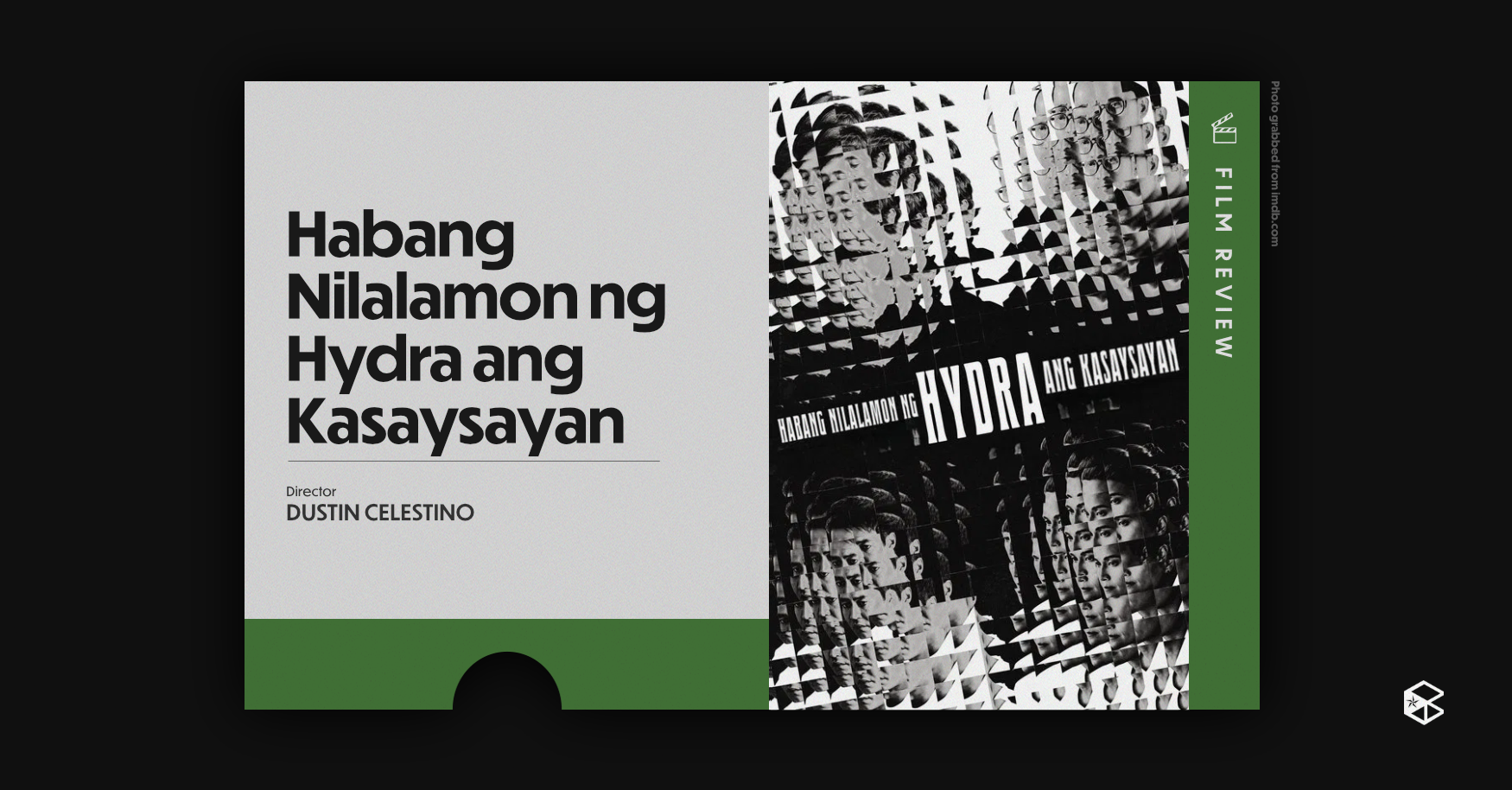
Habang Nilalamon ng Hydra ang Kasaysayan
Layout by Hiro Odamaki
Habang Nilalamon ng Hydra ang Kasaysayan unveils itself as Dustin Celestino’s as a dialogue-driven existential drama that won a Special Jury Award at the 2023 Cinemalaya Film Festival for his previous film Cradle of the Brave. Written, directed, and conceptualized by himself, the film is both a love letter and an eye opener for a nation struggling with memory, truth, and the corrosive effects of disinformation.
The story begins after the electoral loss of Eleanor Robles (Francis Ignacio), an analogue for real-life candidate Leni Robredo, who lost in the 2022 Philippines presidential election. Four Filipinos confront the slow erasure of memory and truth in a country eaten by disinformation: Kiko (Jojit Lorenzo), a political strategist and campaign manager; Bea (Dolly de Leon), a history professor whose father was abducted and tortured during the Marcos dictatorship
Meanwhile, the other two are David (Zanjoe Marudo), is a speechwriter writing a book on Philippine politics using the hydra as a metaphor; and Mela (Mylene Dizon), is an election lawyer who meets David on a dating app and is forced to confront painful family secrets—her father is General Lanuza (Nanding Josef), a government executioner responsible for Martial Law atrocities. The four eventually meet at David's book launch, where they confront their own contradictions and the absurdity of their situation.
In a country where historical revisionism has successfully rehabilitated a dictator’s family, where victims of atrocities are dismissed, and where disinformation spreads faster than fact-checkers can debunk it, Habang Nilalamon ng Hydra ang Kasaysayan insists that remembering itself is a radical act of resistance. The hydra keeps growing new heads. History keeps getting rewritten.
The film provokes this one question: how do you fight for memory when an entire nation wants to forget?
Sinners
Layout by Hiro Odamaki
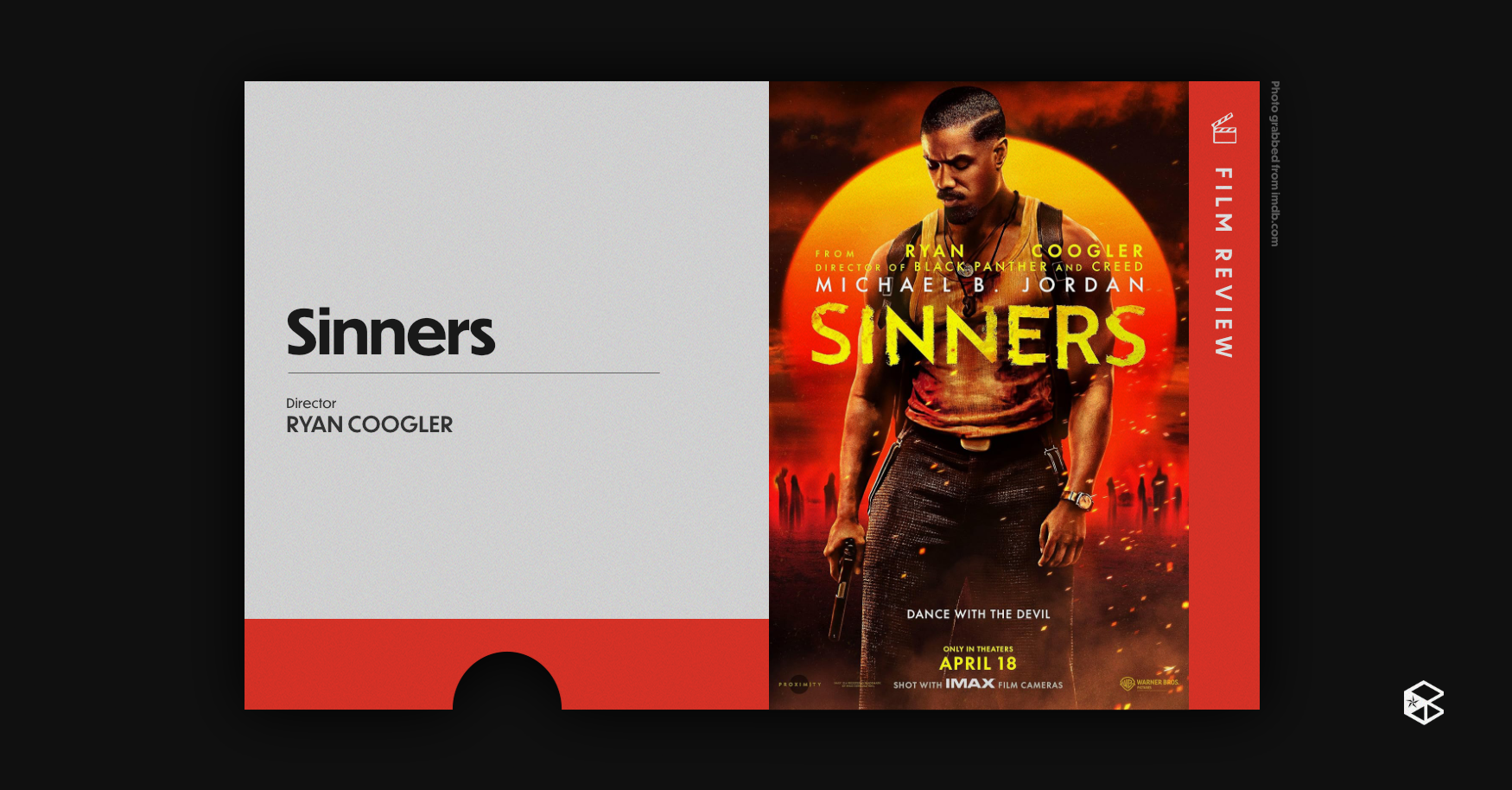
Ryan Coogler’s (Black Panther, Creed) Sinners is his boldest, most genre-defying project yet—a gore-drenched period horror that blends Delta Blue mysticism with vampire dread into something genuinely new. Written and produced by Coogler, the film is hailed by many as his most visually striking and thematically layered work so far.
Set in the Jim Crow Deep South of 1932, the story follows twin brothers Smoke and Stack Moore (both portrayed by Michael B. Jordan in a tour-de-force dual performance), who return to their Mississippi hometown with stolen Chicago money and dreams of opening a juke joint. When they recruit their cousin Sammie (Miles Caton), a gifted blues guitarist, they unknowingly awaken an ancient supernatural evil lurking in Clarksdale. Their adversary manifests as Remmick (Jack O'Connell), an unhinged Irish vampire who feeds not just on blood, but on the erasure of Black culture and history itself.
Coogler constructs a haunting meditation on racism, and the transformative power of Black musical tradition, anchored by Ludwig Göransson's extraordinary score that blends 1930s blues with visceral horror atmospherics. This is accompanied by Coogler’s use of vampire mythology to literalize what marginalized communities have already known while presenting how horror has always been America’s most honest lens of examining racial violence.
Sinners is a direct challenge to the year’s most insidious cultural trend: the sanitization of Black history, cultural assimilation at the risk of erasure, along with the broader backlash against acknowledging systemic racism. The Moore brothers’ attempt to build something of their own in a system designed to extract their labor and destroy their dreams mirrors the exhaustion of minorities in 2025 who watch hard-won progress systematically rolled back.
Yet Coogler refuses nihilism—the film’s commercial success (the first original film to cross $200 million domestically since 2017) proves that audiences are hungry for stories that don’t shy away from the West’s ugliest truths.
In a year when historical memory itself has become a battleground, Sinners demonstrate that some truths are too powerful to be buried, and some art is too essential to be silenced.
Magellan
Layout by Hiro Odamaki
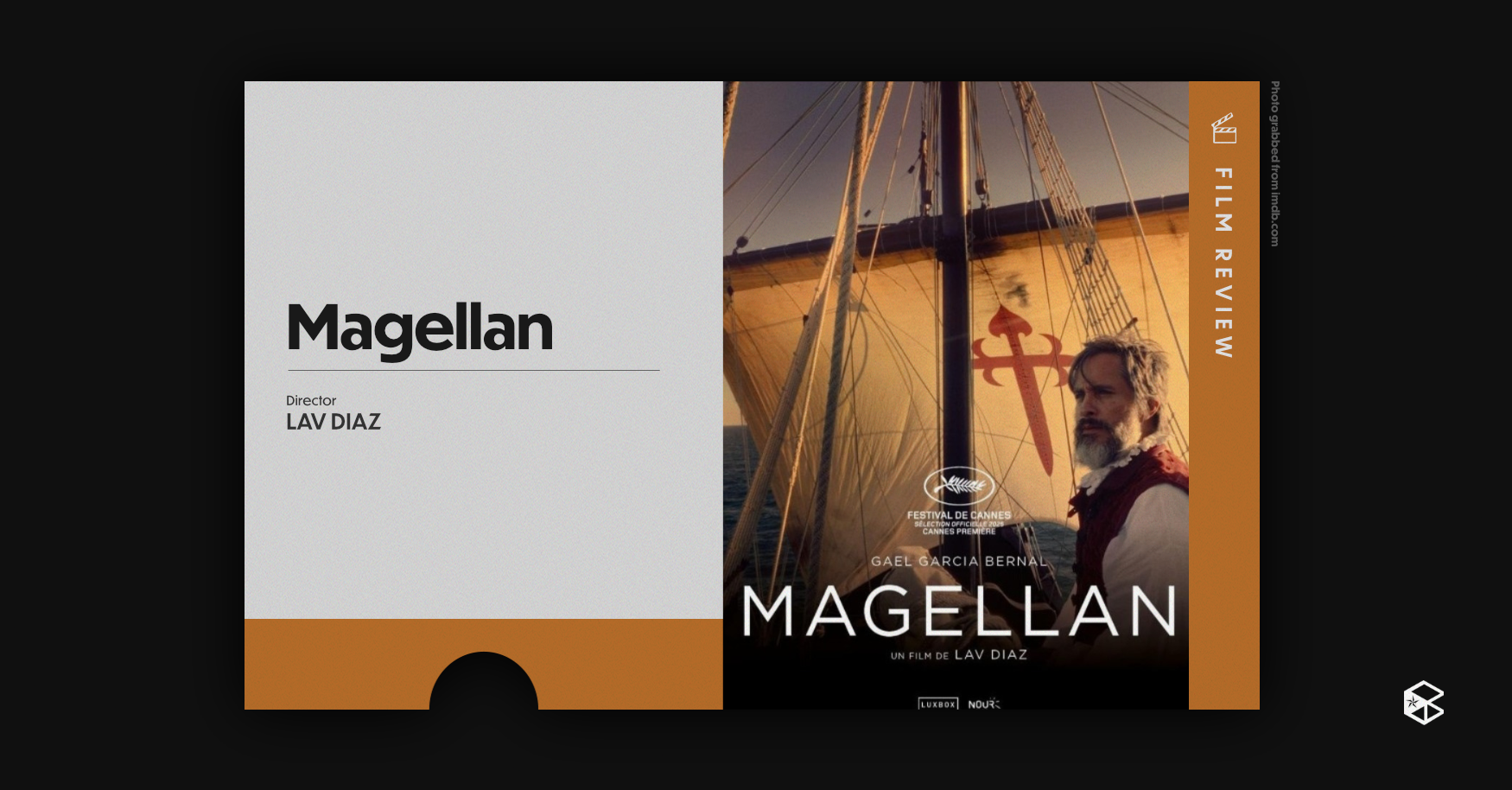
Magellan sets sail as Lav Diaz’s (From What Is Before, Norte, End of History) most accessible yet uncompromising work: a post-colonial epic dismantling the mythology of exploration by centering the perspectives erased from history.
The story follows Ferdinand Magellan (Gael García Bernal), a Portuguese navigator whose dreams of circumnavigating the globe are rejected by his own king, prompting him to seek Spanish funding for his audacious 1519 expedition. Leaving behind his pregnant wife Beatriz (Angela Azevedo) and accompanied by Enrique (Amado Arjay Babon), a Cebuano slave who secretly worships his native gods, Magellan's voyage descends into mutiny, starvation, and execution. When he arrives in Cebu and forces conversions by burning the natives' sacred idols, fate lures him into battle against the mythical warrior Lapu-Lapu.
Diaz delivers his most narratively gripping film yet, balancing epic scope with an intimately raw devastation. Shot on film with compositions that evoke 16th century oil paintings, every frame feels pulled from a museum canvas yet rendered with contemporary urgency. The film’s structure of centering Enrique's perspective transforms a familiar tale of exploration into a story of Indigenous agency and calculated resistance, which elevates it from the standard historical drama.
Magellan, in a time where historical narratives have become warzones, demonstrates why controlling the past remains essential to maintaining power. Magellan's burning of the anitos—destroying Indigenous spiritual systems in the name of civilization—mirrors contemporary efforts to erase marginalized histories all in order to rewrite conquest as benevolent discovery.
As debates rage over what constitutes divisive concepts versus factual accounting of the empire's costs, Magellan refuses historical amnesia—a demonstration that some truths are too powerful to remain buried beneath convenient myths.
Made at the right time
These films demand recognition first and foremost as exceptional cinemas—works that would command attention in any era through sheer craft, and storytelling prowess. Beyond just didactic message films masquerading as art, they’re thrilling, heartbreaking, darkly hilarious sometimes, and visually stunning works that prove challenging cinemas can also be deeply entertaining.
Their arrival in 2025 feels anything but accidental. In a year drowning in slop and ragebait, where historical revisionism operates at industrial scale, and collective memory itself has become contested terrain, these six films insist that remembering is both an aesthetic and a moral imperative. From Anderson's aging revolutionaries to Diaz's colonized subjects reclaiming their narrative, these works prove that cinema's greatest power lies in making the stakes of our present moment impossible to ignore.
These films won’t save us. Art never does. But they might do something more dangerous: they might make us remember. And in 2025, when forgetting has become the default setting, when entire histories can be rewritten with enough bots and enough noise, memory doesn’t act as just resistance.
It’s ammunition. Load it carefully.
